
kezhiding kezhiding

2026 Best AC DC Regulator Types for Global Buyers?

Time:2026-09-14 Author:Sienna
0%

Choosing the right ac dc regulator in 2026 requires more than comparing voltage ratings or online prices. Global buyers must examine input range, output stability, efficiency, thermal performance, and protection features. A unit installed inside a factory cabinet faces different conditions than one used in a compact medical instrument or outdoor control box.

Real-world testing often reveals details that product sheets miss. Listen for transformer noise. Check heat after continuous operation. Inspect terminals, insulation, and airflow paths. These small observations can expose poor design or unsuitable installation conditions. Buyers should also confirm regional electrical requirements, documentation quality, warranty terms, and after-sales support before placing large orders.

Several regulator types deserve attention, including linear regulators, switched-mode designs, isolated modules, DIN-rail power supplies, and programmable industrial units. Each option balances cost, accuracy, efficiency, size, and serviceability differently. A low-cost model may appear attractive, yet its heat loss can increase maintenance expenses over time. That matters.

This guide compares the leading ac dc regulator categories for global purchasing decisions. It considers practical applications, supplier credibility, testing methods, and long-term operating risks. Independent certifications can strengthen confidence, but certification alone does not prove perfect field performance. That is worth remembering.

No single regulator fits every market. Careful selection does.
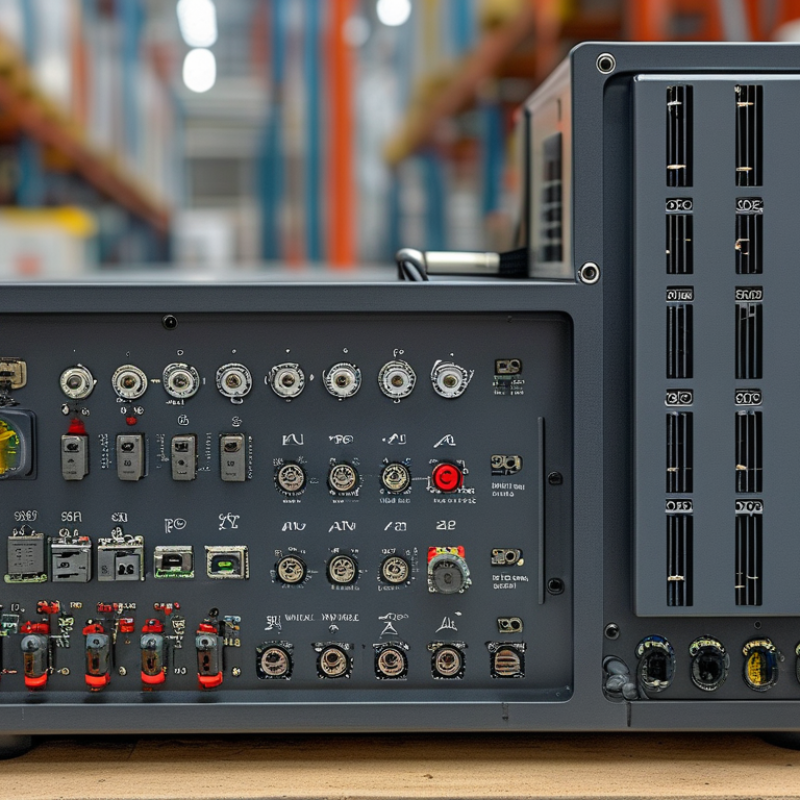
2026 Best AC DC Regulator Types for Global Buyers?

AC-DC Regulator Fundamentals: Topologies, Inputs, and 2026 Applications

An AC-DC regulator converts unstable mains electricity into controlled DC power. Its topology determines efficiency, isolation, size, noise, and cost. Most global designs accept 85–264 VAC at 50 or 60 Hz. Wider inputs may be necessary for industrial sites and weak grids.

An isolated flyback topology suits compact adapters and low-power controls. Forward converters handle moderate power with better transformer utilization. LLC resonant converters reduce switching losses in higher-power equipment.

A bridge rectifier and power-factor-correction stage often precede these circuits. Linear regulation remains simple, but wastes energy as heat. Efficiency is not everything. Thermal space matters too.

The IEA’s Electricity 2024 report projects data-center electricity demand could exceed 1,000 TWh by 2026. That growth increases demand for efficient AC-DC front ends, redundant supplies, and high-density cooling systems.

WSTS’s Spring 2025 forecast places global semiconductor sales near 697 billion dollars for 2025, signaling continued electronics expansion. Medical equipment, robotics, charging infrastructure, and smart appliances will need different input protections and transient performance.

Buyers should verify surge immunity, leakage current, harmonic limits, standby consumption, and safety certification for each destination.

That assumption is risky. A regulator passing laboratory tests may behave differently beside motors, long cables, or dusty enclosures. Engineers should test real loads, not only ideal resistors.

Linear vs Switching Regulators: Efficiency Ranges from 50% to 95%

For global AC-DC buyers, regulator efficiency often decides thermal size, enclosure cost, and operating life. Linear regulators remain simple and quiet, but efficiency follows Vout/Vin. A 12-volt input feeding 5 volts delivers only about 42% efficiency before additional losses. Real systems commonly reach 50% to 70%. The remaining energy becomes heat. Heat tells the truth.

Switching regulators transfer energy through high-frequency conversion, often achieving 80% to 95% efficiency at rated load. However, performance changes with voltage, frequency, load, and standby conditions. A lightly loaded converter may lose efficiency through switching and control overhead. The U.S. Department of Energy’s External Power Supply technical analysis emphasizes active-mode and no-load losses, rather than relying on one headline percentage. Measure at the load.

European Ecodesign Regulation (EU) 2019/1782 also uses output-dependent efficiency formulas. Its limits show why a universal “95% efficient” claim can mislead buyers. A compact 20-watt adapter may operate near the upper 80% range, while a well-designed higher-power unit can approach the low 90s. Field testing adds another layer: long cables, ventilation gaps, and unstable input voltage can reduce practical efficiency. Engineers should compare measured efficiency at 10%, 50%, and 100% load, then review standby consumption separately. The 50% floor is not universal, and the 95% ceiling needs conditions.

Buck, Boost, and Buck-Boost Regulators: Matching Voltage and Power Needs

2026 Best AC DC Regulator Types for Global Buyers?

Buck, boost, and buck-boost regulators solve different voltage and power problems after AC power is rectified. A buck regulator reduces a higher DC voltage efficiently. It suits equipment needing stable 12V from a 24V supply. A boost regulator raises voltage when the input falls below the required output. It helps battery systems and long cable installations. A buck-boost regulator handles input voltages above and below the target. This flexibility is valuable for devices using unstable industrial supplies.

Power selection requires more than checking output voltage. Measure continuous load, startup current, temperature, and expected efficiency. A regulator rated close to its limit may overheat inside a sealed enclosure. Leave practical headroom. Experience shows that airflow, wiring length, and connector resistance can change real performance. Global buyers should also verify input frequency, safety documentation, electromagnetic compatibility, and regional installation requirements. Specifications alone can mislead.

Tips: Record the lowest and highest input voltage first. Then calculate peak power, not only average consumption. Select buck for step-down needs, boost for step-up needs, and buck-boost when both conditions occur. Check thermal performance at the hottest expected ambient temperature. A small prototype can reveal noise or startup issues before production. Do not assume maximum efficiency at every load. That assumption often needs reconsideration.

Global Compliance Benchmarks: IEC 62368-1, DOE Level VI, and EU 2019/1782

For global buyers, the best AC DC regulator in 2026 is not always the highest-wattage model. Selection should begin with compliance conditions. IEC 62368-1 uses a hazard-based safety framework for audio, video, information, and communication equipment. It evaluates energy sources, insulation, temperature, fire risk, and accessible parts. A compact enclosed adapter may reduce installation space, but its creepage distance still needs verification. Small errors matter.

DOE Level VI adds efficiency testing for external power supplies. The U.S. Department of Energy evaluates average active-mode efficiency across multiple load points, including 25%, 50%, 75%, and 100% output. It also measures no-load power. These figures expose weak performance during standby. A regulator that performs well only at full load is not necessarily efficient in routers, displays, or charging docks.

EU Regulation 2019/1782 sets Ecodesign requirements for external power supplies sold in the European market. The regulation covers active efficiency, no-load consumption, product information, and technical documentation. The European Commission’s Ecodesign working documents show why part-load behavior deserves attention: many adapters spend long periods below their rated output. For 2026 sourcing, buyers should request IEC test reports, DOE Level VI data, EU declarations, and input-voltage records for 100–240 V operation. USB-C PD, fixed-voltage, and desktop regulators each fit different loads. Certification alone is not enough. Test conditions can differ.

Buyer Selection Criteria: Ripple, Thermal Limits, MTBF, and Control Interfaces

For global buyers, AC-DC regulator selection begins with measured performance, not catalogue promises. Ripple should be checked in millivolts peak-to-peak at the actual load. Use the stated bandwidth and probe method. Otherwise, comparisons become misleading. A 24 V regulator may look quiet at light load, then show sharp spikes near its current limit. Test it with motors, relays, and long cable runs. Real equipment behaves differently.

Thermal limits deserve equal attention. Review derating curves, airflow requirements, ambient temperature, and enclosure size. A regulator operating at 80% load in a cool laboratory may overheat inside a sealed cabinet. Keep clearance around heat-producing components. Small temperature increases can reduce capacitor life and practical reliability. Monitor the case temperature during a long burn-in test. Do not trust touch alone.

MTBF is useful only when its conditions are clear. Ask whether the figure assumes a specific temperature, load, and calculation method. It is not a warranty. Control interfaces also affect field performance. Analog adjustment is simple, while PWM, I2C, SPI, or CAN can support monitoring and remote control. Check voltage levels, isolation, startup behavior, fault reporting, and software compatibility. Interface documentation is sometimes incomplete. That weakness matters. A careful buyer should request test data, sample units, and thermal evidence before approving volume production. Perfect predictions are rare, and my own early evaluations have sometimes underestimated cable-induced noise.

FAQS

How efficient are linear regulators in practical use?

Efficiency follows Vout divided by Vin. A 12-volt input producing 5 volts reaches about 42% before extra losses. Real systems often reach 50% to 70%. The unused energy becomes heat. Heat tells the truth.

Why can switching regulators be more efficient?

Switching regulators transfer energy through high-frequency conversion. They often achieve 80% to 95% efficiency at rated load. Results change with voltage, frequency, load, and standby conditions. Measure at the load.

Is a 95% efficiency claim always reliable?

No. Efficiency depends on test conditions and output power. A compact 20-watt adapter may remain near the upper 80% range. A larger, well-designed unit may approach the low 90s. The ceiling needs conditions.

Which load points should buyers test?

Compare efficiency at 10%, 50%, and 100% load. Also measure standby or no-load consumption separately. A converter can perform well at full load but poorly in standby. Do not guess.

What safety details matter in a compact enclosure?

Check insulation, temperature, fire risk, accessible parts, and creepage distance. A smaller enclosure saves space but may reduce internal clearance. Inspect the design under real operating voltage. Small errors matter.

Why should input-voltage testing cover a wide range?

Test operation across 100–240 V input when global deployment is planned. Record efficiency, output stability, temperature, and startup behavior at each voltage. Unstable input conditions can reduce practical performance. Test conditions differ.

How should ripple be evaluated?

Measure ripple in millivolts peak-to-peak at the actual load. Record probe method and measurement bandwidth. Test motors, relays, and long cables, not only resistive loads. A 24-volt unit may show sharp spikes near its current limit.

What thermal checks should be completed before volume purchasing?

Review derating curves, airflow requirements, ambient temperature, and enclosure size. Run a long burn-in test inside a representative cabinet. Monitor the case temperature with an instrument. Touch alone is unreliable.

How useful is MTBF when comparing regulators?

MTBF matters only when temperature, load, and calculation method are clearly stated. It is not a warranty or a guaranteed service life. Request thermal evidence, sample units, and test records. My early evaluations sometimes underestimated cable-induced noise.

Conclusion

Choosing the right ac dc regulator in 2026 requires a clear understanding of topology, input conditions, efficiency, and application demands. Linear regulators offer simple, low-noise operation but may achieve only 50% to 70% efficiency, while switching regulators can reach approximately 80% to 95% with improved thermal performance. Buck, boost, and buck-boost designs should be matched to whether the system needs to reduce, increase, or regulate voltage across changing input conditions.

Global buyers should also evaluate compliance with IEC 62368-1, DOE Level VI, and EU 2019/1782 requirements when selecting power-conversion equipment. Important purchasing criteria include output ripple, thermal limits, expected MTBF, load behavior, protection features, and available control interfaces. By balancing electrical performance, safety requirements, energy efficiency, and long-term reliability, buyers can select a regulator that supports stable operation across industrial, consumer, communications, and embedded applications.

Sienna

Sienna

Sienna is a skilled marketing professional with a deep expertise in our company’s core products and services. With a passion for innovation and detail, she plays a pivotal role in crafting insightful blog posts that not only highlight the unique features of our offerings but also provide valuable......