
kezhiding
Choosing the best AC voltage controller in 2026 starts with the load, not the product label. The term can describe different equipment, from voltage regulators to thyristor-based controllers. Buyers should confirm the intended function before comparing models. A heater bank, an induction motor, and a sensitive control cabinet do not have identical requirements.
The International Energy Agency’s Electricity 2024 report projected global electricity demand growth averaging 3.4% annually from 2024 through 2026. That forecast makes reliable power management an important consideration for expanding industrial and commercial sites. It does not prove every facility needs an AC voltage controller. Site conditions matter. A controller selected for one plant may perform poorly elsewhere.
Compare input-voltage range, phase configuration, rated current, overload capacity, cooling method, and response to changing loads. Ask suppliers for test data, installation guidance, and clear operating limits. For example, a dusty workshop with frequent motor starts may need different protection and thermal headroom than a clean room running steady heating loads. Harmonics and electrical noise also deserve attention, especially with phase-angle control. There is no universal winner. A product page rarely tells the whole story. Verify the datasheet against measured site conditions, and check that local technical requirements are addressed. IEA’s forecast is useful context, not a purchasing specification. The best choice is the one supported by traceable performance evidence, suitable service access, and a realistic review of the installation’s needs.
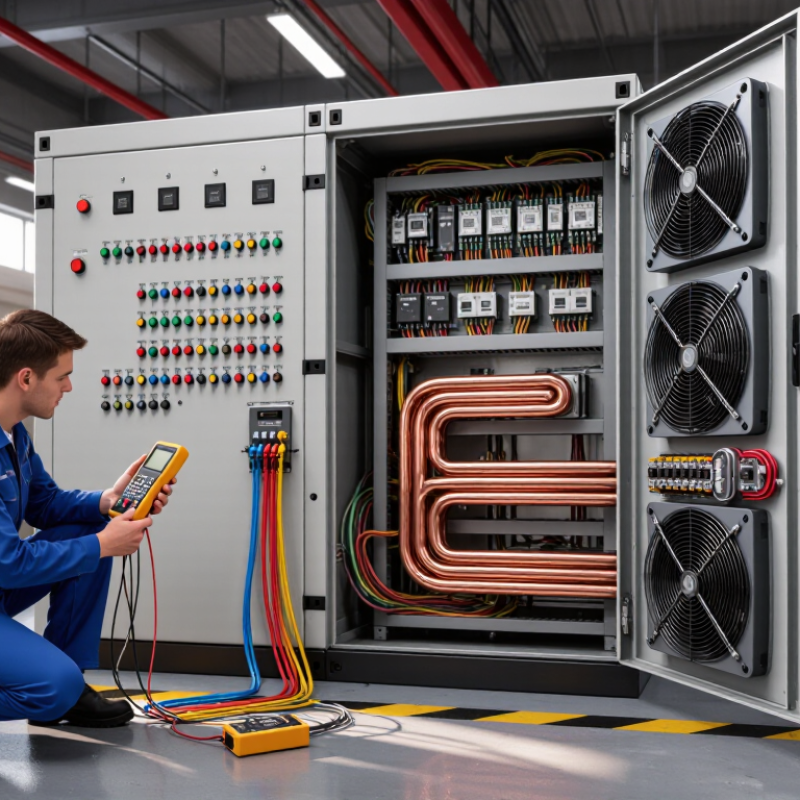
An AC voltage controller adjusts the effective voltage delivered to an alternating-current load. It commonly uses semiconductor switches, such as thyristors, to control when current flows during each cycle. With phase-angle control, switching begins partway through each waveform. With cycle control, the unit delivers or skips complete cycles. The output voltage changes, but the supply frequency generally does not. Not magic.
This adjustment can regulate heater output or dim compatible lamps. A heater may warm more slowly as its effective voltage falls. For motors, compatibility matters: some types may overheat, hum, or lose torque under unsuitable control. That detail is easy to miss. I would not assume that every controller works with every load, even when the voltage rating looks right.
Before selecting one, check the input voltage and frequency, load type, current rating, cooling needs, and control method. A controller operating near its rated current may need careful ventilation; a warm enclosure is a practical warning, not just a number on a label. Phase-angle switching can also create electrical noise and a distorted waveform. Measurements should use equipment suitable for controlled AC waveforms. Specifications help, but they do not replace checking the actual load and installation conditions.
AC voltage controllers vary the voltage delivered to a load, but their switching method changes waveform quality, response, and suitability. In phase-angle control, a thyristor or triac delays conduction during each AC half-cycle. This adjusts the RMS output quickly, making it useful for lamps and some heating loads. The trade-off is harmonic distortion and possible interference with nearby equipment. A soft glow can still hide a rough waveform.
Integral-cycle, or burst-fire, control switches complete cycles on and off. It often suits thermal loads because their temperature changes slowly. However, switching groups of cycles can cause visible flicker or disturbances on a weak supply. IEEE Std 519-2022 gives voltage-distortion limits at the point of common coupling; for systems at or below 1 kV, total harmonic distortion is limited to 8%. Actual compliance depends on the installation, not just the controller.
Tap-changing controllers adjust a transformer’s turns ratio, while servo-driven designs move a wiper across a variable transformer. They generally preserve a cleaner waveform, but mechanical systems respond more slowly and need maintenance. A useful distinction. The IEA has estimated that motor-driven systems consume about 53% of global electricity, underscoring why load type matters when selecting voltage control. Yet that broad figure cannot predict savings for a single machine. Not always. Check load behavior, supply strength, and distortion measurements before choosing a controller.
For global buyers, an AC voltage controller’s rated input range matters more than a headline output figure. A 230 V supply can fluctuate, and a controller designed for a narrow window may struggle during dips or surges. Check the permitted input range, output tolerance, and frequency compatibility against the actual site supply. Small details matter.
Current capacity needs equal scrutiny. Compare the continuous current rating with the load’s normal draw, then check the overload rating and its duration. Motors, heaters, and transformer loads behave differently at startup. A motor may briefly draw several times its running current, while a resistive heater is usually more predictable. Leave sensible headroom, but do not assume a larger unit automatically performs better.
Control method affects stability, heat, and waveform quality. Phase-angle control can respond quickly, but may create electrical noise or harmonics that affect sensitive equipment. Cycle-based control can suit thermal loads, though it may not fit every process. Ask for measured efficiency, power factor, and harmonic data at realistic operating points, not just ideal conditions. Also verify cooling requirements, ambient-temperature limits, and protection against overcurrent and overheating. A datasheet may omit thermal derating; that omission deserves a question. In a warm cabinet, even a modest temperature rise can reduce available current. Check the installation conditions before choosing a rating.
A practical, brand-neutral comparison guide. Values below describe common electrical-system conditions and selection considerations, not guaranteed specifications for any particular controller.
| Selection Dimension | Typical Specification or Range | Why It Matters | What Buyers Should Verify |
|---|---|---|---|
| Nominal supply voltage | Common systems include 100–120 V, 200–240 V, and 380–415 V AC. Some industrial systems use other nominal voltages, including 440 V or 480 V. | A controller must match the actual supply and load voltage. A mismatch can prevent correct operation or damage equipment. | Confirm the site’s measured voltage, phase configuration, allowable supply variation, and the controller’s rated input range. |
| Supply frequency | 50 Hz and 60 Hz are the principal utility frequencies worldwide. | Frequency affects compatible loads and, for some magnetic loads, operating behavior and heating. | Check that both the controller and the connected load are rated for the local frequency. Do not assume a product supports both. |
| Phase and wiring configuration | Single-phase and three-phase systems are common. Three-phase supplies may use three-wire or four-wire arrangements, depending on the installation. | Controller topology and connection requirements vary with phase count and wiring. Incorrect connections can create unsafe operating conditions. | Match the controller’s wiring diagram to the supply and load; verify neutral requirements, phase sequence where applicable, and grounding arrangements. |
| Control method | Common methods include phase-angle control and burst-firing (integral-cycle) control. | Phase-angle control adjusts conduction within each AC cycle but can increase waveform distortion and electrical interference. Burst firing switches complete cycles and may cause visible flicker with some loads. | Choose a method suited to the load, response needs, flicker limits, and power-quality requirements. Ask for harmonic or EMC data where relevant. |
| Output-voltage adjustment | Many controllers vary the load’s effective RMS voltage by changing thyristor conduction. The usable adjustment range is model- and load-dependent. | A controlled AC output is not necessarily a clean sinusoidal waveform. A displayed voltage reading may also depend on the meter’s true-RMS capability and waveform. | Request the specified control range, output waveform information, measurement method, and minimum stable output under the intended load. |
| Current and load rating | Rated current is specified by each manufacturer and depends on the unit’s cooling conditions, ambient temperature, installation, and load type. | Current rating alone may not reflect starting current, overload duration, or the thermal demands of a real installation. | Size from load current and duty cycle; check overload limits, inrush or starting current, derating curves, and required protective devices. |
| Load compatibility | Resistive heaters are a common application. Inductive loads, transformers, lamps, and motors may require application-specific controller designs. | Different loads respond differently to phase control and switching. A general-purpose voltage controller is not automatically suitable for motor speed control. | Provide the supplier with the load type, power, power factor, starting behavior, and operating cycle. Confirm explicit approval for the application. |
| Cooling and ambient conditions | Power-semiconductor losses generate heat; many units use heatsinks, and higher-current designs may require forced-air cooling. | Excess heat can trigger thermal protection, reduce service life, or require current derating. | Check the rated ambient temperature, ventilation clearances, fan requirements, altitude limits, enclosure conditions, and derating guidance. |
| Protection and fault handling | Available functions vary and may include overtemperature protection, overcurrent protection, short-circuit coordination guidance, and alarms. | Semiconductor devices can be vulnerable to fast fault currents. Protection must be coordinated with the installation rather than assumed from a feature list. | Review the protection devices and ratings specified by the manufacturer, fault-current limits, alarm behavior, and reset procedure. |
| Enclosure and installation environment | Ingress protection is stated using an IP code under IEC 60529; the required level depends on exposure to dust, water, and contact. | An enclosure suitable for a clean electrical cabinet may not be suitable for outdoor, wet, or dusty installation. | Confirm the complete assembled enclosure rating, mounting orientation, cable entry method, and environmental limitations. |
| Standards and compliance | IEC 60947-4-3 covers semiconductor controllers and contactors for non-motor loads; IEC 60947-4-2 covers semiconductor motor controllers and starters. | The relevant standard depends on the application. National rules and required conformity documentation can differ by destination market. | Request applicable test reports and declarations, then verify local electrical, EMC, safety, and import requirements for the installation. |
| Control interface and monitoring | Interfaces may include local potentiometers, analog command signals, digital inputs, or communication options; availability is model-specific. | Control compatibility affects integration with a PLC, building system, or process controller. | Confirm signal type and range, isolation, input impedance, wiring, feedback availability, and behavior after signal loss or power restoration. |
Buyer note: Compare controllers using the same supply voltage, phase arrangement, load type, duty cycle, ambient conditions, and protection assumptions. Final selection should be based on the manufacturer’s application-specific datasheet and qualified electrical design review.
Matching a controller starts with the load, not its advertised power rating. Record the supply voltage, phase, rated current, starting current, and operating hours. A 3 kW heater behaves differently from a 3 kW induction motor. Resistive heaters often suit voltage control; motors may lose torque, run hot, or fail to reach the required speed. For variable-speed fans or pumps, check whether a frequency drive is more appropriate. Start with the load.
The U.S. Department of Energy’s Improving Motor and Drive System Performance sourcebook reports that motor-driven systems use about 68% of electricity in U.S. manufacturing. That figure makes efficient motor control worth examining, but it does not mean every motor should use an AC voltage controller.
Check the motor type, minimum operating speed, and manufacturer’s allowable voltage range. Also compare the controller’s continuous RMS current rating with the load, then allow for startup surges and enclosure temperature. A cool test bench can hide a problem in a hot cabinet.
Application details matter. The IEA’s 2018 The Future of Cooling report projected global cooling electricity demand could rise from about 2,000 TWh in 2016 to 6,200 TWh by 2050.
For fan and pump loads, verify stable operation across the intended control range and assess harmonics, noise, and heat dissipation. Check the site’s frequency and supply conditions, too. One overlooked detail can change the choice. A short commissioning test under real load is useful, though it cannot replace proper sizing.
A reliable AC voltage controller must fit the destination market, not just the equipment list. Check the required input voltage, frequency, phase, load type, and operating range before comparing models. Standards differ by region and application, so request current safety and electromagnetic compatibility documentation. Confirm that certificates apply to the exact configuration being purchased. A familiar document name is not enough.
Supply reliability deserves equal attention. Ask for realistic production lead times, clear shipping terms, and availability of replacement parts such as fans, fuses, and control boards. A spare module can matter when a production line is waiting. Small details matter. Confirm that manuals, wiring diagrams, and terminal labels match the delivered unit. They do not always.
Support should be practical and reachable. Check response hours, available languages, troubleshooting steps, and whether remote guidance is offered during commissioning. Ask how faults are diagnosed, and what information technicians need, such as alarm codes or measured input voltage. A short, written escalation path helps when a site is under pressure. No plan catches every issue; installation conditions can still surprise you. Ask a qualified local professional to verify suitability and compliance before purchase.
It delays conduction during each AC half-cycle. This changes the output’s RMS voltage quickly. It can also create harmonic distortion and interfere with nearby equipment. A soft lamp glow can hide a rough waveform.
It switches complete AC cycles on and off. This often suits heating loads, because temperature changes slowly. On a weak supply, grouped cycles may cause visible flicker. Simple, but not flawless.
They generally produce a cleaner waveform than phase-angle control. Tap-changing designs adjust a transformer ratio; servo-driven designs move a wiper. Both respond more slowly and need mechanical maintenance. Check the moving parts, too.
Match the controller to the load, operating range, and supply strength. A heater may tolerate burst-fire switching, while a lamp may show flicker. Measure distortion where possible. A broad energy statistic cannot predict savings for one machine.
Check the applicable standard and measurement point for the installation. One referenced limit for systems at or below 1 kV is 8% total harmonic distortion at the point of common coupling. Actual compliance depends on the whole installation.
Verify input voltage, frequency, phase, load type, and operating range. Request current safety and electromagnetic compatibility documents for the exact configuration. A familiar certificate name is not enough.
Ask for realistic lead times, clear shipping terms, and replacement-part availability. Fans, fuses, and control boards can keep a line running. Confirm the manuals and terminal labels match the delivered unit. They may not.
Check response hours, language options, troubleshooting steps, and remote guidance. Ask what technicians need, such as alarm codes and measured input voltage. Keep a written escalation path. Site conditions can still surprise you.
An ac voltage controller adjusts the effective voltage delivered to a load, helping regulate power, manage equipment performance, and support efficient operation. Different controller types use distinct methods, such as phase-angle control or switching techniques, and each has advantages depending on the load and required response. When comparing options in 2026, buyers should look beyond rated voltage and current to consider control range, efficiency, waveform quality, response time, cooling needs, and protection features.
Choosing the right controller starts with understanding the load, including whether it is resistive, inductive, or otherwise sensitive to voltage changes. The application, operating environment, installation requirements, and expected duty cycle also affect suitability. Global buyers should verify relevant regional standards, confirm product documentation and supply availability, and assess the accessibility of technical support, spare parts, and service. A careful match between specifications, application needs, and supplier capabilities can help deliver reliable, safe, and maintainable power control.
