
kezhiding
Choosing the best supplier in China for an AC-to-DC adjustable voltage regulator takes more than comparing prices. Buyers should check product specifications, manufacturing experience, and the support offered after delivery. A reliable supplier can explain input range, adjustable output, rated current, ripple, and protection features in clear terms. Ask for datasheets and test records. Details matter.
In practical use, a regulator may power a control cabinet, bench setup, or production line. The right model depends on the load, operating environment, and required output stability. A compact unit might suit a small enclosure, while a higher-current model may need more space for cooling. These distinctions are easy to overlook. I would also ask how the supplier handles sample testing, customization requests, lead times, and quality checks before shipment. Clear answers are useful; broad promises are not.
For an ac to dc adjustable voltage regulator, verify that the listed specifications match your application rather than relying on product photos or a short sales description. Check connector options, installation guidance, and available technical documents. If possible, test a sample under realistic load conditions. That step can reveal limitations that a datasheet does not make obvious. No supplier is automatically the best for every project. A careful comparison of technical fit, communication, consistency, and support gives buyers a more dependable basis for choosing.
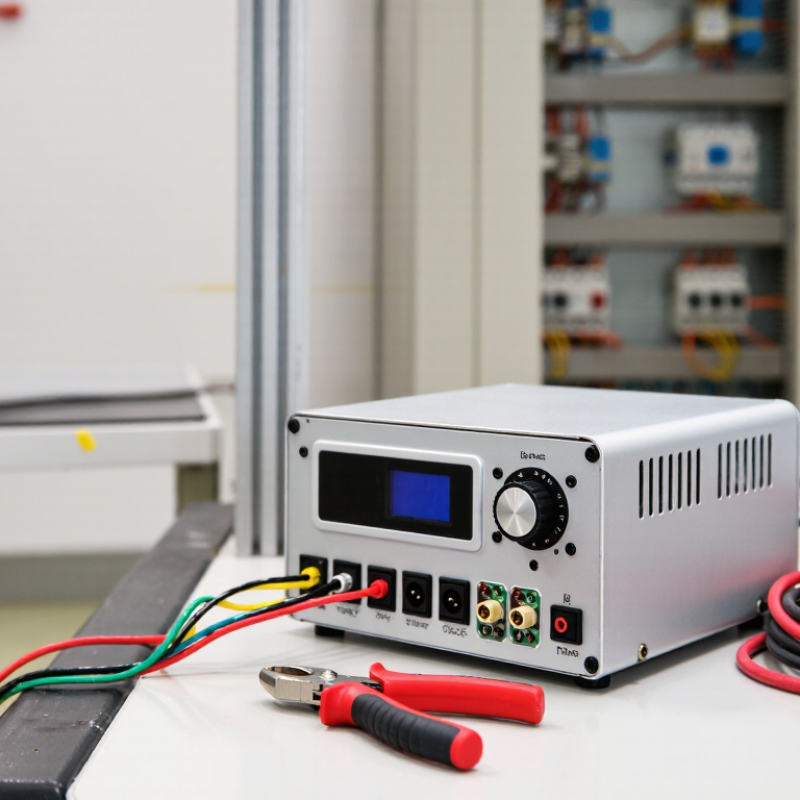
An AC-to-DC adjustable voltage regulator converts alternating current from a wall supply into direct current, then lets the user set the output voltage. Inside, a rectifier changes AC into pulsating DC; capacitors smooth it, and a control circuit stabilizes the output. Switching designs are often efficient, while linear designs can produce less electrical noise but release more heat. The front-panel display helps, but it does not guarantee safe operation. Check polarity, current limits, ripple, and isolation before connecting a load. Small detail. Big consequences.
The U.S. Department of Energy’s Technical Support Document for External Power Supplies examines active-mode efficiency and no-load power, useful measures for comparing conversion losses. The IEA’s Electricity 2024 report projected global electricity demand growth averaging about 3.4% annually from 2024 to 2026. That forecast describes the wider energy context, not regulator performance. For a practical selection, compare adjustment range, rated current, ripple specification, thermal protection, and output isolation. A 0–30 V label sounds flexible, yet a 2 A limit may constrain motors or heaters. Datasheets can also leave startup behavior unclear. Test the unit with the actual load when possible.
An adjustable AC-to-DC voltage regulator converts incoming alternating current into a controlled direct-current output. In many designs, a transformer or input stage prepares the voltage before rectification. Diodes then direct current into one polarity, while capacitors smooth the resulting waveform. The output is not perfectly flat. Small details matter.
A control circuit monitors the output and compares it with the selected voltage. If a connected load draws more current, the output may begin to dip. The regulator responds by adjusting a switching device or a linear pass element. Switching designs typically reduce heat at higher power levels, while linear designs can provide low-noise output but dissipate more energy as heat. Heat is measurable. A warm case can signal that the load, airflow, or voltage drop deserves attention.
For example, a technician might set a bench supply to 12 volts and connect a small motor. The voltage should be checked again while the motor starts, because startup current can exceed its steady running current. Also verify the input range, maximum output current, ripple, and protection features against the intended application. A display alone does not confirm stable performance; a suitable meter and, when needed, an oscilloscope provide better evidence. Selection is not always obvious, and a regulator rated just above the expected load may leave little room for startup surges.
A reliable China-based supplier should prove performance with traceable test records, not broad claims. Ask for output-voltage accuracy, load regulation, ripple, efficiency, and thermal-derating curves at defined input and load conditions. Request samples and test them at low, nominal, and full load. Check that overvoltage, overcurrent, and overtemperature protections recover safely. Ask for evidence.
A useful benchmark comes from the U.S. Department of Energy’s external power supply standards: units rated at 49 watts or less have a 0.1-watt no-load power limit. This applies to covered external supplies, not every adjustable industrial regulator, but it shows why idle consumption deserves a clear specification.
For supplier checks, request the applicable safety and EMC test reports, calibration records, and serial- or lot-level traceability. Confirm that the delivered unit matches the tested revision. A neat report can still miss real operating conditions. I would also compare promised derating against the actual enclosure and airflow, because small details can change temperature considerably.
When comparing Chinese AC to DC adjustable voltage regulator suppliers, start with the exact operating conditions. Record your AC input range, required DC voltage, peak current, and expected load changes. Then check whether each supplier provides clear figures for ripple, voltage accuracy, efficiency, and temperature limits. A tidy datasheet matters. Vague ratings make comparison difficult.
Ask for a sample and test it with your real load, not only a bench meter. Observe startup behavior, output stability, and heat after several hours. Check whether protection features cover overload, short circuit, and overheating, and request relevant test records. Compare lead times, minimum order quantities, warranty terms, and how quickly technical staff answer detailed questions. A low price may still fit, but only if performance remains consistent across production batches. No checklist catches every mismatch. One practical detail can be overlooked: confirm whether the quoted unit includes the connectors and enclosure shown in product photos. Supplier responses are useful evidence, though they do not replace your own verification.
Anonymous comparison framework with illustrative product specifications. Values are examples for supplier evaluation, not verified quotations or claims about specific manufacturers. Confirm all ratings, test results, certificates, and delivery terms directly with shortlisted suppliers.
| Comparison criterion | Supplier Profile A Standard bench supply |
Supplier Profile B Configurable industrial supply |
Supplier Profile C Higher-power modular supply |
What buyers should verify |
|---|---|---|---|---|
| Illustrative DC output range | 0–30 V, 0–10 A | 0–60 V, 0–5 A | 0–100 V, 0–10 A | Confirm whether voltage and current limits are continuously adjustable and whether the full range is available at the rated power. |
| Illustrative rated output power | 300 W | 300 W | 1,000 W | Check the power rating, derating curve, cooling requirements, and whether maximum voltage and current can be delivered simultaneously. |
| Illustrative AC input | 100–240 V AC, single phase | 100–240 V AC, single phase | 200–240 V AC, single phase | Match the input range and frequency to the installation site. Ask whether the stated range applies at full load. |
| Control and display options | Front-panel controls and digital display | Front panel; remote analog control may be available | Front panel; remote or communication options may be available | Request the interface list, command protocol, connector details, and any additional cost for remote control. |
| Protection features to compare | Check OVP, OCP, OTP, and short-circuit behavior | Check OVP, OCP, OTP, and short-circuit behavior | Check OVP, OCP, OTP, and short-circuit behavior | Ask for protection thresholds, recovery behavior, and test evidence. OVP = overvoltage; OCP = overcurrent; OTP = overtemperature. |
| Regulation and ripple data | Request voltage regulation and ripple specifications | Request voltage regulation and ripple specifications | Request voltage regulation and ripple specifications | Compare stated test conditions, measurement bandwidth, load range, and units; do not compare headline figures measured under different conditions. |
| Compliance documentation | Request applicable reports and declarations | Request applicable reports and declarations | Request applicable reports and declarations | Verify document validity, product-model coverage, issuing body, and destination-market requirements. Do not rely on a logo alone. |
| Quality and production checks | Request inspection plan and sample test record | Request inspection plan and sample test record | Request inspection plan and sample test record | Ask about incoming inspection, burn-in or functional testing, traceability, and how nonconforming units are handled. |
| Quotation and delivery comparison | Obtain current quotation and lead time | Obtain current quotation and lead time | Obtain current quotation and lead time | Compare like-for-like configuration, minimum order quantity, sample charges, Incoterms, packaging, warranty, and spare-parts support. |
| Best-fit use case | General laboratory or light-duty testing | Applications needing a broader output range or configurable interfaces | Applications requiring higher output power | Select based on the load profile, duty cycle, environment, control needs, and required safety approvals—not price alone. |
Before ordering an AC-to-DC adjustable voltage regulator, define the real operating conditions. Check the input AC range, adjustable DC output range, and continuous current rating. Do not rely on a peak-current figure alone. Ask for ripple, voltage regulation, efficiency, and startup behavior under load. Numbers matter. Confirm whether the unit includes overcurrent, overvoltage, and thermal protection. Also check cooling needs; a compact enclosure can run hot beside a machine cabinet.
Review the datasheet and request a sample when practical. Test it at the lowest and highest expected input voltages, then across your normal load range. Watch the output with a meter, and check temperature after sustained operation. A clean datasheet is useful, but it cannot reveal every issue. I would not treat one successful bench test as proof of long-term reliability.
Before placing a larger order, ask the supplier how units are inspected and whether production changes are documented. Clarify warranty terms, lead time, minimum order quantity, and replacement procedures in writing. Request relevant test reports and market-specific conformity documents where needed. Compare answers, not just prices. Slow replies may be a warning, though they are not proof of poor quality. A little uncertainty remains until the regulator works in your actual setup.
Typical nominal AC mains voltage by market — confirm that the supplier’s specified input range covers your actual installation.
Typical nominal values shown: United States 120 V, China 220 V, European Union 230 V, and Japan 100 V. Mains frequency is typically 60 Hz in the United States, 50 Hz in China and the European Union, and 50 or 60 Hz in Japan. Before ordering, check the unit’s input-voltage and frequency range, adjustable DC output range, rated current and power, ripple, protection features, applicable certifications, and test documentation. Actual supply conditions and requirements can vary by location and application.
A rectifier changes incoming AC into pulsating DC. Capacitors smooth it, and a control circuit stabilizes the output. You can adjust the voltage.
Switching designs are often more efficient. Linear designs can create less electrical noise but release more heat. Neither is automatically better.
Check the input range, adjustable output range, continuous current, ripple, regulation, efficiency, and startup behavior. Numbers matter. A 0–30 V unit rated for 2 A may not suit a motor or heater.
No. Check polarity, current limits, ripple, and output isolation before connecting a load. A display shows a number, not the whole story.
Test it at the lowest and highest expected input voltages. Check normal loads with a meter, then monitor temperature during sustained operation. One bench test cannot prove long-term reliability.
Confirm overcurrent, overvoltage, and thermal protection. A compact enclosure can run hot beside a machine cabinet. Cooling matters.
Ask how units are inspected and how production changes are documented. Put warranty terms, lead time, minimum order quantity, and replacement procedures in writing. Request relevant test reports and conformity documents where needed.
No. It may be a warning, but it is not proof. I would still want clear answers and a test in my actual setup.
An ac to dc adjustable voltage regulator converts alternating current into direct current and lets users set the output voltage to suit different equipment needs. Its operation typically involves rectification, filtering, and voltage regulation, with control mechanisms helping maintain a stable output as input conditions or load requirements change. Understanding these stages helps buyers assess whether a regulator’s adjustment range, accuracy, capacity, and protective features are suitable for their application.
When evaluating a China-based supplier, buyers should look beyond price and compare product specifications, manufacturing consistency, quality-control processes, technical support, and communication responsiveness. Before placing an order, confirm the required input and output ranges, current capacity, operating conditions, testing procedures, customization options, delivery terms, and warranty coverage. Clear documentation and samples or test results can help verify that the product matches the stated requirements. A careful comparison supports a more informed sourcing decision and reduces the risk of choosing a regulator that does not perform reliably in its intended use.
