
kezhiding kezhiding

China Top AC Motor Regulator Manufacturers?

Time:2026-09-19 Author:Mason
0%

Choosing among China’s top AC motor regulator manufacturers requires more than comparing prices or browsing polished product pages. A reliable supplier should demonstrate engineering experience, stable production, and clear technical documentation. This includes voltage ranges, current ratings, control methods, protection functions, and tested operating temperatures. These details matter when a regulator must control a conveyor, pump, fan, or industrial machine without unnecessary downtime.

This guide examines manufacturers that serve domestic and international markets. It considers product quality, customization ability, factory capabilities, certifications, delivery performance, and after-sales support. Practical evidence matters. Factory audits, sample testing, wiring diagrams, and customer references can reveal more than promotional claims. A capable AC motor regulator manufacturer should explain how its products respond to overloads, voltage changes, heat, and frequent starts.

No single ranking fits every application. That is an important limitation. A supplier suitable for a small ventilation system may not meet the demands of heavy industrial equipment. Some published specifications may also require independent verification. Buyers should compare tested samples under realistic loads, not only catalogue figures. This article offers a structured starting point for evaluating China’s leading manufacturers, while encouraging careful technical review before any purchase decision. Good engineering remains specific. A trusted supplier communicates clearly, documents limitations, and accepts reasonable questions about performance. That confidence is earned through evidence, not slogans.
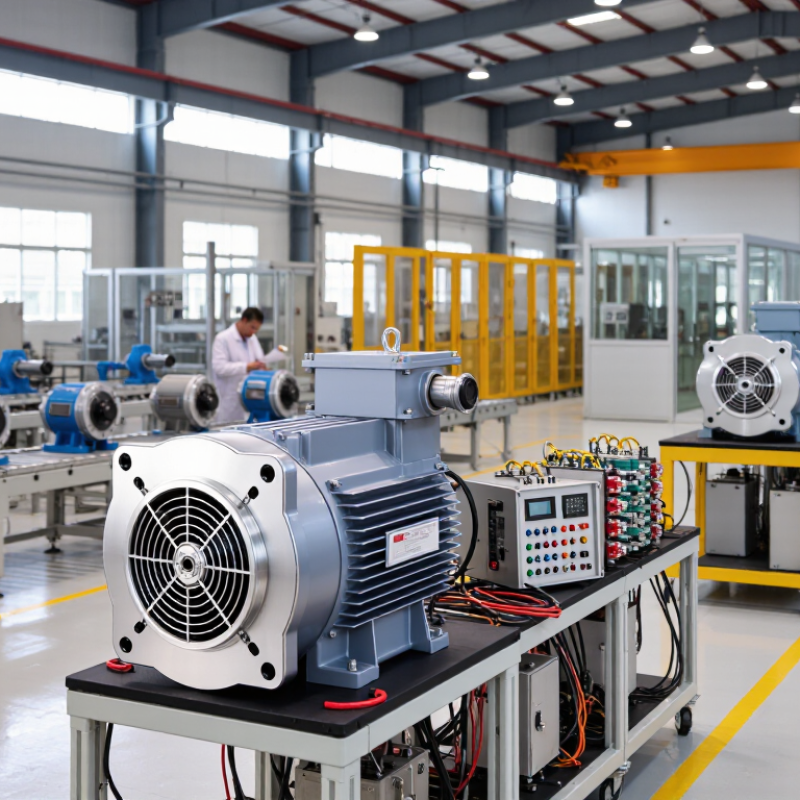
China Top AC Motor Regulator Manufacturers?

What Is an AC Motor Regulator?

An AC motor regulator controls an induction motor’s speed, torque, and starting current. In industrial equipment, it usually means a variable-frequency drive, or VFD. The device first converts incoming AC into DC, then produces controlled AC output. Lower frequency reduces motor speed. Voltage is adjusted to maintain usable torque.

It is not a simple dimmer switch. Poor settings may create overheating, vibration, or nuisance trips. Sensorless vector control can improve low-speed performance, while basic V/f control suits many fans and pumps. The International Energy Agency reported that electric motor systems consumed about 53% of global electricity in its Energy Efficiency Market Report 2016. The U.S. Department of Energy also estimates that motor-driven systems use about 70% of industrial electricity. Efficiency depends on the complete system, not the regulator alone.

When evaluating manufacturers in China, request load-test records, harmonic data, EMC results, and protection details. Check compliance with IEC 61800 requirements where applicable. A 7.5 kW pump may need different overload capacity than a conveyor with frequent starts. Confirm the enclosure rating, cooling method, braking function, and service temperature. Ask for parameter backup files and fault-history examples. These details reveal engineering depth.

One overlooked issue is installation quality. A strong regulator can still fail with undersized cables or poor grounding. Field experience proves this repeatedly. Yet laboratory data cannot predict every site condition, so selection should remain cautious.

How China’s AC Motor Regulator Industry Is Organized

China’s AC motor regulator industry is organized as a layered manufacturing network. Large factories often focus on high-volume controllers, while smaller workshops handle customized designs and low-volume orders. Component suppliers provide circuit boards, sensors, relays, cooling parts, and protective housings. System integrators then combine these elements for pumps, fans, conveyors, compressors, and industrial machinery.

This structure supports flexible purchasing, but it also creates uneven quality. During supplier evaluations, buyers should examine test records, calibration methods, insulation protection, and thermal performance. A reliable manufacturer can explain its control range, overload response, production capacity, and after-sales process clearly. Factory visits may reveal practical details, such as clean assembly benches, labeled test instruments, and traceable component storage. Documentation matters too. However, paperwork alone is not proof. I have seen technically impressive samples fail during extended heat testing. That risk deserves attention.

Tips: Ask whether the manufacturer controls key components internally or purchases them from several sources. Request load-test data under realistic voltage, current, and temperature conditions. Check whether engineering staff can modify software and hardware together. Clarify inspection points before shipment, not after a problem occurs. A small pilot order is useful. It may expose communication gaps early. China’s industry is efficient, but supplier comparison should remain careful and evidence-based. No supplier map is perfect. Even experienced buyers can overlook service capability behind attractive pricing.

Key Criteria for Evaluating Chinese Manufacturers

China Top AC Motor Regulator Manufacturers: Key Criteria for Evaluating Chinese Manufacturers

A capable supplier should prove performance beyond a polished factory tour. The International Energy Agency reports that electric motor systems consume roughly 53% of global electricity. Therefore, regulator efficiency, control accuracy, and thermal stability deserve careful testing. Ask for measured data at 25%, 50%, and 100% load. Check speed response, overload capacity, braking behavior, and fault recovery. Request test records linked to serial numbers. Not just brochures.

Compliance evidence matters. Confirm alignment with applicable IEC standards, electromagnetic compatibility requirements, and Chinese GB or export-market requirements. The U.S. Department of Energy estimates that motor-driven equipment uses about 70% of industrial electricity. Small control losses can become expensive across thousands of operating hours.

Review harmonic distortion, standby consumption, enclosure protection, and cooling design. Factory audits should examine calibration schedules, incoming inspection, aging tests, and component traceability. Speak with engineering staff, not only sales representatives.

I would also compare field data.

Ask for failure rates, warranty claims, and documented corrective actions. A supplier unwilling to share weaknesses may be hiding process gaps. Still, published figures can be selective. I would independently test sample units under dusty, humid, and fluctuating-voltage conditions. Delivery consistency matters too. Verify production capacity, spare-part access, software support, and response times in writing. The strongest evaluation combines laboratory evidence with practical operating experience.

Leading Manufacturer Types and Their Product Capabilities

China Top AC Motor Regulator Manufacturers?

China’s AC motor regulator sector includes several manufacturer types, each serving different operating needs. Large automation manufacturers often provide variable frequency drives, soft starters, control panels, and monitoring software. Their products suit factories with standardized production lines and centralized maintenance.

Specialist motor-control manufacturers usually focus on compact regulators, speed controllers, braking units, and overload protection. They may offer stronger customization for pumps, fans, conveyors, and compressors. Custom industrial control builders can modify wiring, enclosure size, cooling systems, and communication protocols. OEM-focused suppliers also develop regulators around a buyer’s motor, voltage range, and installation space.

Performance depends on more than rated power. Engineers should check starting current, speed stability, heat dissipation, harmonic control, ingress protection, and emergency stopping behavior. Factory testing records matter. So do insulation tests and load simulations. A polished catalogue is not enough. Some suppliers describe wide compatibility, but actual performance may change with cable length or poor ventilation. This detail is often missed.

Tips: Request a sample test report, wiring diagram, and temperature-rise data. Ask how faults are recorded. Confirm support for local electrical standards. Test one unit before ordering many. Small mistakes become expensive later.

Applications and Purchasing Considerations in Global Markets

When evaluating China’s top AC motor regulator manufacturers, global buyers should look beyond catalog prices. These devices support fans, pumps, conveyors, compressors, and ventilation systems. A suitable regulator must match motor power, voltage, frequency, load type, and operating environment. For example, a dusty workshop may need stronger enclosure protection than a clean commercial building.

Ask manufacturers for test reports, wiring diagrams, efficiency data, and traceable quality records. Compliance with relevant international electrical standards can simplify customs clearance and installation. Check whether the supplier offers factory testing, sample approval, and technical support in your language. Clear documents matter. So does response speed.

Purchasing teams should compare thermal performance, overload protection, noise levels, and expected service life. A regulator that runs hot inside a control cabinet may fail earlier than its price suggests. Confirm spare-part availability and warranty terms before signing a large order. Small details can become expensive delays. I would also request a pilot batch before full production, especially for unstable grids or unusual motor loads. A low quote may be attractive, but it can hide weaker components or limited testing. This is where buyers sometimes move too quickly. Recheck the specifications with an independent engineer, because one overlooked parameter can affect safety, efficiency, and long-term operating costs.

China Top AC Motor Regulator Manufacturers? - Applications and Purchasing Considerations in Global Markets

Product Category Typical Control Method Common Motor Capacity Typical Electrical Range Main Applications Advantages Important Purchasing Checks Relevant Standards and Compliance
Variable Frequency Drive (VFD) Variable-frequency, variable-voltage control using PWM inverter technology Approximately 0.4–630 kW for low-voltage industrial systems Commonly 200–240 V or 380–480 V AC; 50/60 Hz input; adjustable output frequency Pumps, fans, conveyors, compressors, HVAC systems, mixers and machine tools Energy savings in variable-torque loads, soft starting, speed regulation and programmable control Motor current, overload rating, braking method, enclosure rating, harmonic performance, communication protocols and service support IEC 61800-2, IEC 61800-3, IEC 61800-5-1, applicable EMC and low-voltage requirements
Soft Starter Controlled reduction of motor starting voltage through thyristor phase-angle control Approximately 5.5–800 kW, depending on voltage and duty cycle Usually 200–690 V AC; fixed operating frequency of 50 or 60 Hz Large pumps, fans, compressors, crushers, conveyors and refrigeration equipment Lower starting current and mechanical shock compared with direct-on-line starting Starting current limit, bypass contactor, start/stop frequency, motor thermal protection, line compatibility and cooling requirements IEC 60947-4-2 and applicable short-circuit, EMC and electrical safety requirements
AC Voltage Regulator Voltage adjustment through thyristor or triac phase-angle control Typically used for small and medium single-phase or three-phase motor loads Commonly 110–240 V single-phase or 220–480 V three-phase; fixed 50/60 Hz Fans, blowers, ventilation equipment, shaded-pole motors and selected universal motor applications Compact design, simple speed adjustment and lower initial cost for compatible motor types Motor compatibility, minimum stable speed, acoustic noise, waveform distortion, heat dissipation and minimum load requirements Applicable IEC low-voltage, EMC, insulation and electrical safety requirements; confirmation is required for the target market
Servo Drive for AC Motor Closed-loop vector control with encoder or resolver feedback Commonly 0.1–30 kW in precision motion systems Typically 200–240 V or 380–480 V AC input; motor and drive voltage must be matched Robotics, packaging machinery, CNC equipment, printing, textile and electronic assembly systems High positioning accuracy, rapid response, precise torque control and coordinated motion capability Encoder compatibility, peak torque, inertia ratio, communication bus, tuning software, regeneration handling and motion profiles IEC 61800 series, machinery safety requirements, EMC requirements and applicable functional-safety provisions
Integrated Motor Controller Embedded inverter or electronic commutation with local and remote control Generally below 22 kW for packaged equipment and decentralized systems Commonly 24 V DC control with 110–480 V AC motor power, depending on configuration Pumps, air-handling units, material handling, fans and compact automation equipment Reduced panel wiring, easier installation, local diagnostics and flexible system integration Ingress protection, ambient temperature, mounting position, network compatibility, firmware control and replacement procedure IEC 61800 requirements where applicable, plus machinery, EMC and low-voltage product regulations
Global Purchasing Note: Product ratings, certifications, delivery terms and after-sales coverage should be verified against the destination country's voltage system, grid frequency, EMC rules, import requirements, installation environment and applicable machinery-safety legislation. The capacity ranges shown are typical market ranges rather than limits for every manufacturer.

FAQS

How is China’s AC motor regulator industry organized?

Large factories usually produce high-volume controllers. Smaller workshops handle customized designs and limited orders. Component suppliers provide boards, sensors, relays, cooling parts, and housings.

Which applications commonly use AC motor regulators?

They support fans, pumps, conveyors, compressors, ventilation systems, and industrial machinery. Each application may require different control settings and protection levels.

What specifications should buyers confirm before purchasing?

Check motor power, voltage, frequency, load type, and operating environment. Dusty workshops may require stronger enclosure protection than clean indoor spaces.

How can buyers evaluate a manufacturer’s technical ability?

Request load-test data, wiring diagrams, efficiency results, and calibration records. Ask whether engineers can modify software and hardware together. Documentation helps, but it is not proof.

What should a factory visit reveal?

Look for clean assembly benches, labeled test instruments, and traceable component storage. These details show process discipline. They do not guarantee perfect performance.

Why are thermal tests important?

A regulator may appear strong during a short demonstration. Extended heat testing can reveal earlier failures inside a control cabinet. I have seen this happen.

Should buyers place a pilot order?

Yes, especially for unstable grids or unusual motor loads. A small batch can expose communication gaps, missing documents, or weak testing before larger production.

What purchasing details deserve special attention?

Confirm spare-part availability, warranty terms, inspection points, and technical support. Also check response speed. Cheap pricing can hide weaker components or limited testing.

How can buyers reduce specification mistakes?

Recheck the requirements with an independent engineer. One overlooked parameter can affect safety, efficiency, and operating costs. Buyers sometimes move too quickly.

Conclusion

China’s ac motor regulator industry includes manufacturers specializing in variable-frequency drives, electronic speed controllers, soft starters, and integrated motor control systems. These products regulate motor speed, torque, voltage, and current to improve operating efficiency and protect equipment. The industry is organized across component suppliers, engineering-focused producers, original equipment manufacturers, and system integrators, allowing buyers to choose solutions ranging from standardized controllers to customized industrial assemblies.

When evaluating Chinese manufacturers, buyers should consider product stability, control accuracy, power range, thermal management, safety design, testing procedures, certifications, production capacity, and after-sales support. Different manufacturer types may serve applications such as pumps, fans, conveyors, compressors, machine tools, and HVAC systems. Global purchasers should also assess compatibility with local electrical standards, communication protocols, installation conditions, delivery schedules, documentation, warranty terms, and technical service capabilities. A well-matched ac motor regulator can reduce energy consumption, extend motor life, improve process control, and support reliable operation across commercial and industrial environments.

Mason

Mason

Mason is a seasoned marketing professional with a deep expertise in the company's offerings and a passion for driving brand awareness. With a strong background in digital marketing strategies, he has an innate ability to connect with diverse audiences and effectively communicate product benefits.......