
kezhiding
Selecting reliable AC regulator suppliers is a practical challenge for global buyers. Product listings often look similar, yet performance can differ significantly under real operating conditions. An ac regulator must manage voltage fluctuations, protect connected equipment, and remain stable during changing loads. These requirements matter in factories, data rooms, medical facilities, and commercial buildings. A supplier’s reputation helps, but it cannot replace technical verification.
This guide examines leading suppliers through measurable criteria. Product range, voltage capacity, response time, thermal design, testing procedures, and documented quality systems all deserve attention. Buyers should also review certifications, warranty terms, replacement support, and production consistency. Shipping capability matters too. A well-built unit is less useful when spare parts arrive months late. Clear communication can prevent costly specification errors.
No supplier is perfect.
Some companies excel in engineering but offer limited regional support. Others provide fast delivery but fewer customization options. That trade-off deserves careful review. Factory audits, sample testing, and reference checks can reveal details that brochures hide. Pricing should be assessed against service life, energy efficiency, installation requirements, and downtime risks. The lowest quotation may not represent the lowest ownership cost. Still, published claims require independent checking. This article offers a balanced starting point for comparing AC regulator manufacturers and distributors across international markets. It focuses on practical evidence, responsible sourcing, and dependable after-sales cooperation. Availability can change, and buyer requirements are never identical. A thoughtful shortlist remains essential.
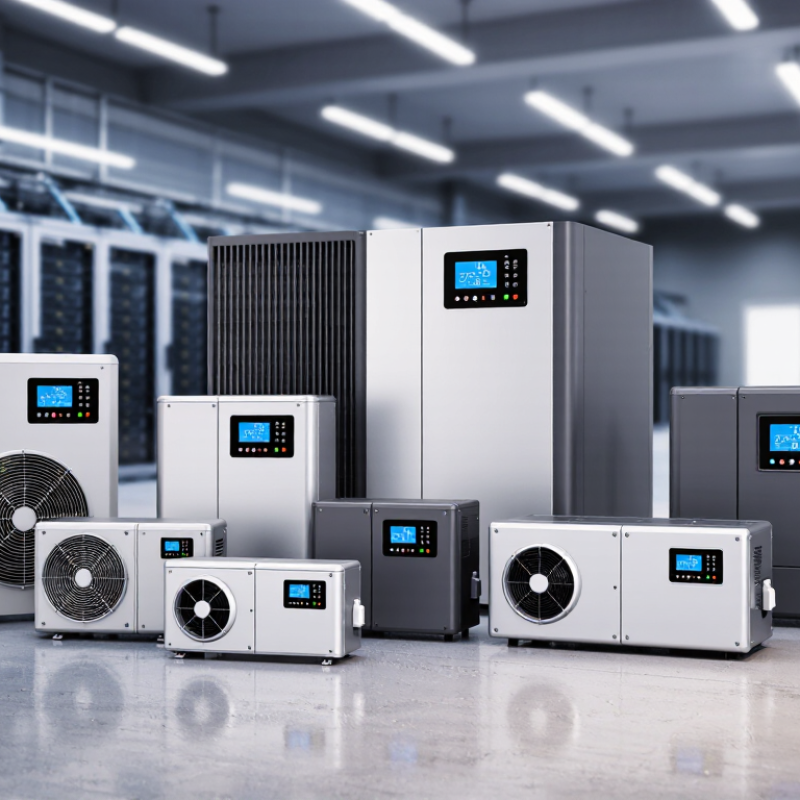
An AC regulator maintains a steadier voltage for electrical equipment. It corrects voltage that rises above or falls below the desired level. This protection matters in factories, offices, clinics, and remote facilities with unstable power grids.
Inside the unit, a sensing circuit measures incoming voltage many times per second. A control system compares that reading with the target output. It then adjusts transformer taps, electronic switches, or both. The regulator may boost low voltage or reduce excessive voltage. Many models also include delay protection, overload shutdown, and thermal monitoring. It is not the same as a surge protector. It also cannot repair poor wiring.
Load behavior matters. Motors, compressors, and pumps draw heavy starting current. A regulator sized only for normal running power may fail during startup. Field technicians often check voltage with a calibrated meter under real operating conditions. They also record input variation throughout the day. That test can reveal problems that a short inspection misses.
Global buyers should request efficiency data, response time, permitted input range, noise levels, and independent test records. Installation guidance and replacement-part access are equally important. A low purchase price can become expensive when service is unavailable. Some specifications look impressive but lack clear testing methods. That deserves careful questioning. Even experienced buyers occasionally choose capacity too close to the actual load. Leaving reasonable headroom is safer.
Industrial buyers rarely need the same AC regulator for every load. The correct type depends on voltage, current, load behavior, and control accuracy.
Triac regulators suit compact resistive loads, such as heaters, lamps, and small ventilation units. They offer fast switching and simple installation. However, they can create electrical noise and waveform distortion. SCR regulators handle higher power and continuous industrial heating more reliably. They are common in ovens, dryers, extrusion lines, and temperature-control systems. Their heat sinks need proper airflow.
Variable autotransformers provide smooth voltage adjustment with low waveform distortion. They work well in laboratories, testing equipment, and sensitive production processes. Their size and mechanical movement can limit use in dusty factories. Servo-controlled regulators correct voltage changes automatically. They support equipment that cannot tolerate unstable supply conditions, including precision machinery and control cabinets. Maintenance is still necessary.
For motors, selecting a regulator requires care. A simple phase-angle controller may reduce voltage, but it can increase harmonics, noise, or motor heating. Variable-frequency drives are often more suitable when speed control matters. They are not a direct replacement for every AC regulator. Check starting current, power factor, cooling capacity, and enclosure protection before purchasing. Field measurements should include voltage variation and actual load temperature. A common mistake is choosing by rated kilowatts alone. That shortcut can fail. Even experienced teams sometimes underestimate installation space and cable heating. Test the regulator with the real load whenever possible.
Static electronic and ferroresonant regulators generally provide the fastest response for sensitive automation, control, and laboratory loads. Servo-motor and tap-changing regulators are better suited to wider input-voltage variation and high-capacity industrial equipment, although their mechanical response is slower. The figures show representative engineering ranges and should be confirmed against the required voltage, load, frequency, distortion, and overload specifications.
Choosing an AC regulator supplier requires more than comparing unit prices. Global buyers should examine production experience, engineering capacity, and quality records. Ask how long the supplier has produced similar regulators. Request test reports for voltage stability, heat resistance, overload protection, and continuous operation. Clear answers matter.
A reliable supplier should provide traceable materials, inspection procedures, and consistent documentation. Check whether the factory can meet your required input range, output tolerance, frequency, enclosure rating, and quantity. Confirm production samples before placing a large order. Packaging also deserves attention. Moisture barriers and shock protection can prevent damage during long transport. No checklist is perfect. Unusual site conditions may still expose weaknesses.
Tips: Request a sample, factory audit, and recent inspection record. Compare technical replies, not only quotations. Ask who handles warranty claims and replacement parts. A supplier that avoids specific answers may create delays later. Keep every agreed specification in writing, including test methods and acceptance limits. Small details matter. During evaluation, review communication speed and technical accuracy. One careless current rating can affect the entire installation. Suppliers should also explain lead times honestly, especially for customized regulators. A lower price is not useful if production changes without notice or testing evidence remains incomplete.
| Evaluation Dimension | Recommended Benchmark for Global Purchasing | What Buyers Should Verify | Commercial Importance | Suggested Evidence |
|---|---|---|---|---|
| Input Voltage Compatibility | The rated input range should match the destination country, commonly 110 V, 120 V, 220 V, 230 V, or 240 V systems, with an appropriate tolerance range. | Confirm nominal voltage, allowable fluctuation, phase configuration, neutral requirements, and terminal or plug standards. | Prevents installation failure and reduces the risk of overheating or unstable output. | Technical datasheet, wiring diagram, and destination-market configuration list. |
| Output Voltage Accuracy | For general equipment, verify a regulated output typically within ±5%; sensitive equipment may require tighter accuracy such as ±1% to ±3%. | Check whether accuracy is specified at no load, partial load, and full load. | Stable output protects connected equipment and supports consistent operation. | Factory test report, regulation curve, and independent test results where required. |
| Rated Capacity | Capacity should be stated in VA or kVA. Select a unit with practical headroom above the continuous connected load, especially for motor-driven equipment. | Verify continuous rating, overload rating, power factor assumptions, and starting-current capability. | Avoids nuisance shutdowns and premature component stress. | Load calculation, capacity curve, thermal test, and overload test record. |
| Frequency Compatibility | The regulator should support the destination grid frequency, commonly 50 Hz or 60 Hz, or clearly state whether frequency conversion is unavailable. | Confirm input and output frequency, frequency tolerance, and whether the product is frequency-stabilizing or voltage-only. | Prevents incorrect application in international projects. | Product specification, nameplate photo, and application limitations. |
| Response Time | A response time measured in milliseconds is preferable for sensitive loads; the acceptable value depends on the regulator technology and application. | Ask how response time is measured and whether it applies to a defined input-voltage step and load condition. | Fast correction limits the duration of voltage disturbances. | Oscilloscope waveform, test method, and rated operating conditions. |
| Protection Functions | Core protections should include overload, short circuit, over-temperature, surge or transient protection, and high/low-voltage cutoff where applicable. | Confirm protection thresholds, reset behavior, alarm functions, and replacement requirements for protective components. | Improves operational safety and reduces equipment damage. | Protection circuit diagram, fault-test report, and user manual. |
| Efficiency and Heat Management | Efficiency should be assessed at typical operating loads rather than only at full load; ventilation and thermal derating information should be available. | Review efficiency curve, cooling method, ambient-temperature limits, noise level, and installation clearances. | Affects energy cost, enclosure design, service life, and operating noise. | Thermal test, efficiency data, derating chart, and acoustic measurement. |
| Safety and Compliance Documentation | Documentation should identify applicable electrical safety, EMC, environmental, and regional requirements. IEC 61010-1 or IEC 61558-1 may be relevant depending on product design and intended use. | Check certificate scope, product model, issuing laboratory, validity, and whether the document applies to the exact supplied configuration. | Reduces customs, installation, insurance, and market-access risks. | Declaration of conformity, laboratory report, EMC report, and safety certificate. |
| Ingress Protection and Enclosure | The IP rating should match the installation environment; indoor electrical rooms and outdoor or dusty locations have different enclosure requirements. | Verify the tested IP level, material, corrosion resistance, cable-entry design, and mounting orientation. | Protects internal components from dust, moisture, and accidental contact. | IP test report, enclosure drawings, and installation manual. |
| Quality Management | A documented quality system aligned with ISO 9001 is a useful baseline, but certification should not replace product testing. | Review certificate validity, incoming inspection, traceability, calibration control, and corrective-action procedures. | Improves consistency across repeated international orders. | Current certificate, quality manual excerpt, inspection plan, and sample records. |
| Customization Capability | The supplier should clearly define available options for voltage, frequency, phase, connectors, enclosure, display, communication interface, and control logic. | Confirm engineering-change control, sample approval, minimum order quantity, and customization charges. | Enables compliance with local electrical systems and project specifications. | Approved drawings, prototype report, change-control record, and quotation. |
| Testing and Inspection Before Shipment | Each unit or defined production batch should receive documented electrical and functional tests before dispatch. | Ask for routine-test items, sampling level, serial-number traceability, and third-party inspection options. | Detects defects before international transport and installation. | Certificate of conformity, factory acceptance test, and pre-shipment inspection report. |
| Lead Time and Supply Continuity | Lead time should be stated separately for samples, standard production, customized production, and repeat orders. | Verify production capacity, critical-component availability, holiday schedules, and business-continuity arrangements. | Supports reliable project planning and replenishment. | Written production schedule, capacity statement, and historical on-time-delivery data. |
| Warranty and After-Sales Support | Warranty terms should define coverage period, exclusions, response time, spare-parts availability, and repair or replacement procedures. | Confirm remote troubleshooting, service documentation, local support options, and escalation contacts. | Reduces downtime and total cost of ownership. | Warranty certificate, service-level agreement, spare-parts list, and repair workflow. |
| Trade Terms and Total Landed Cost | Compare product price together with packaging, freight, insurance, duties, taxes, installation, commissioning, and expected maintenance. | Request a comparable quotation using the same specifications and Incoterms® rule, such as EXW, FOB, CIF, or DAP. | The lowest unit price may not represent the lowest delivered cost. | Itemized quotation, packing list, shipping estimate, and landed-cost worksheet. |
Top AC Regulator Suppliers for Global Buyers?
East Asia leads the global AC regulator supply market by production scale, component access, and export capacity. China, Japan, South Korea, and Taiwan support dense manufacturing networks. Buyers can find regulators for homes, factories, medical equipment, and data rooms. Price competition is strong, but quality varies between factories. A polished enclosure does not prove stable voltage control. I have seen procurement teams overlook thermal performance during short supplier audits.
Europe remains influential in precision engineering and industrial protection. Its suppliers often focus on strict testing, energy efficiency, and demanding applications. Germany, Italy, and Central Europe serve automation, laboratories, and commercial facilities. North America also holds a strong position, especially for heavy-duty systems and customized power protection. Regional requirements differ. A unit designed for 120V and 60Hz may not suit a 230V and 50Hz installation.
Tips: Confirm input range, output accuracy, response time, cooling method, and overload protection. Request test reports, production samples, and traceable inspection records. Check whether certifications match the destination market. India and Southeast Asia are expanding, supported by rising industrial demand and improving electronics capacity. Their lead times can be attractive, although supplier consistency may need closer monitoring. Regional sourcing is useful, but one audit is never enough.
Top AC Regulator Suppliers for Global Buyers
AC regulator quality depends on design, testing, and installation conditions. In field commissioning, unstable input voltage often exposes weak thermal control first. IEC 61000-4-30 provides methods for measuring power quality, including voltage variations and interruptions. Buyers should request test records, protection settings, and results at full load. A clean factory sample is not enough. Real performance may change in a dusty cabinet at 45°C.
Cost is shaped by more than the purchase price. Copper, semiconductors, enclosure materials, cooling systems, and certification all affect the final quotation. The International Energy Agency’s Electricity 2024 report expects global electricity demand to grow by an average of 3.2% annually through 2026. Higher demand can increase pressure on components and production capacity. Some low-cost units also use smaller heat sinks. That saving may become an early replacement.
Delivery depends on component availability, production planning, inspection, and freight routes. UNCTAD’s Review of Maritime Transport reports that over 80% of global merchandise trade by volume moves by sea. Delays can therefore begin far from the factory. The World Bank’s Logistics Performance Index 2023 evaluates shipment reliability, customs, infrastructure, and tracking. Buyers should request a realistic lead time, not an attractive promise. I would also verify spare-part stock and packaging tests. This step is often overlooked. Supplier claims still require independent checking.
It keeps output voltage closer to a selected level. It can raise low voltage or reduce excessive voltage. This protects equipment from unstable supply conditions.
A sensing circuit measures incoming voltage many times per second. A control system compares it with the target. It then adjusts transformer taps, electronic switches, or both.
No. A regulator corrects ongoing voltage changes. A surge protector mainly limits short, sudden voltage spikes. Neither device repairs damaged wiring.
Motors, compressors, and pumps need special attention. Their starting current can greatly exceed normal running current. A unit sized only for running power may fail during startup.
SCR regulators often suit ovens, dryers, extrusion lines, and continuous heating systems. Their heat sinks need clear airflow. Poor cooling can shorten service life.
They provide smooth voltage adjustment with relatively low waveform distortion. Laboratories and testing equipment may benefit. Dusty factories can challenge their mechanical parts.
Check efficiency, response time, input range, noise, protection settings, and full-load test records. Also confirm spare parts and installation guidance. Attractive specifications may hide weak testing.
Use a calibrated meter under real operating conditions. Record voltage changes throughout the day. Test the actual load, including startup. A short inspection can miss important problems.
A dusty cabinet at 45°C can expose weak thermal design. Cable heating and limited airflow may reduce reliability. I would leave reasonable capacity headroom, though exact needs still require measurement.
Not always. Smaller heat sinks or unavailable replacement parts may create later costs. I would verify delivery promises, packaging tests, and independent records. My first judgment could still be wrong.
An ac regulator is an essential power-control device that adjusts and stabilizes alternating current to help industrial equipment operate safely and efficiently. By controlling voltage, current, or output power, it can protect sensitive machinery, improve process consistency, and reduce the risk of electrical damage. Different applications may require distinct solutions, including voltage regulators, automatic control units, phase-control regulators, and heavy-duty systems designed for demanding industrial environments.
For global buyers, evaluating suppliers involves more than comparing prices. Important considerations include technical performance, product customization, certifications, quality-control procedures, production capacity, warranty support, and communication efficiency. Major supply regions differ in manufacturing expertise, infrastructure, lead times, and export capabilities. Buyers should also assess how raw-material costs, design complexity, testing requirements, order volume, shipping conditions, and after-sales service affect total purchasing cost and delivery reliability. A well-qualified supplier should provide consistent product quality, transparent documentation, realistic schedules, and dependable support throughout the purchasing process.
